Tennessee Service
Crawl Space Encapsulation
The complete moisture and humidity solution
Tennessee-Focused
Statewide service network
Licensed & Insured
Every contractor verified
Free Inspections
No pressure, no obligation
Lifetime Warranty
On encapsulation systems
What is encapsulation?
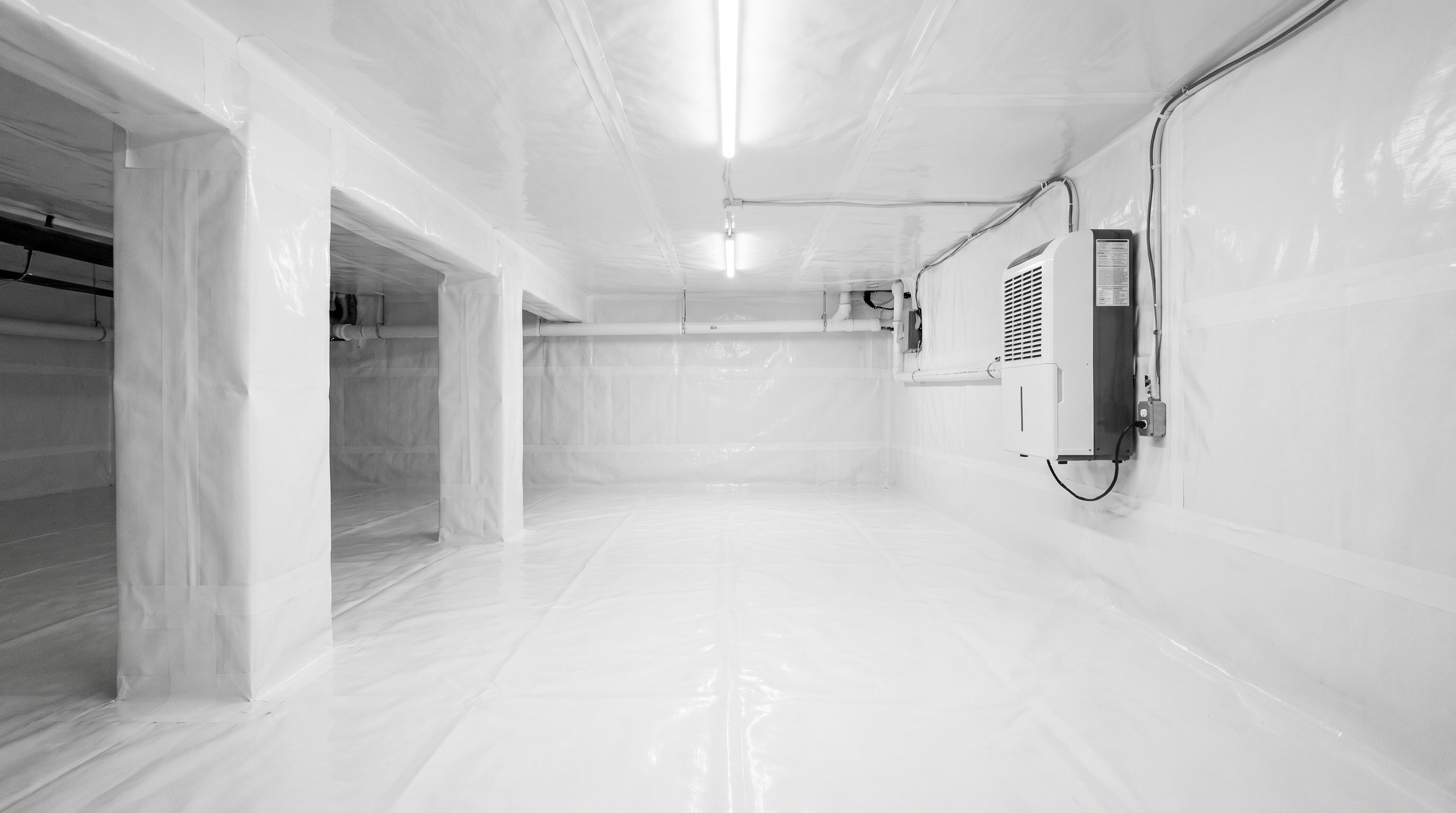
Crawl space encapsulation is the complete system that converts an open, vented dirt crawl space into a sealed, humidity-controlled space. The system has four parts that work together: a reinforced vapor barrier sealing the floor and walls, mechanical drainage if water is an issue, a commercial dehumidifier sized for the volume, and sealed foundation vents. Done correctly, the encapsulated crawl space stays below 60 percent relative humidity year-round.
Why you need it
- Eliminates the mold-growth conditions that exist in nearly every vented Tennessee crawl space
- Stops the stack effect that pulls humid musty crawl space air up into the living space
- Cuts heating and cooling costs by 10 to 18 percent by stopping HVAC duct losses to the crawl space
- Removes the high-humidity environment that destroys floor joists, subfloor, and insulation over time
- Prevents the slow rot that drives expensive subfloor and structural repairs years later
- Closes off the pest entry path that vented crawl spaces give rodents, snakes, and insects
- Adds to home resale value and removes a typical inspection-driven price negotiation
Our process
- Inspection and quote. A licensed contractor enters your crawl space, photographs current conditions, measures square footage, depth, and humidity, identifies any mold or water issues, then writes a flat-rate quote. Free, no obligation.
- Cleanout and prep. Old insulation, debris, and any failed previous vapor barrier are removed. Standing water is pumped out. Existing mold on joists and subfloor is treated by a certified team.
- Vapor barrier installation. A reinforced polyethylene vapor barrier (typically 12 to 20 mil) is installed across the entire crawl space floor and run up the foundation walls. Every seam is taped, every penetration sealed, every wall corner mechanically fastened.
- Drainage if needed. If the crawl space takes water periodically, a sealed sump basin and pump are installed before the vapor barrier seals over the area. Battery backup ensures the pump runs during power loss.
- Foundation vent sealing. Existing foundation vents are sealed shut with insulated covers. The crawl space is no longer connected to outside air.
- Dehumidifier installation. A commercial-grade dehumidifier sized for the crawl space volume is installed with automatic drainage to the sump or exterior. The unit runs on a humidity sensor, not a timer.
- Verification. After 24 to 72 hours, the contractor returns to verify humidity has dropped below 60 percent, all seams are intact, and the dehumidifier is running on a normal duty cycle. You sign off only when conditions are confirmed.
Cost range
$5,000 – $15,000
The wide range reflects crawl space size, depth, existing conditions, and add-ons. Most Tennessee homes fall between $7,500 and $10,500 for a complete system.
Where we serve
Available statewide. Fastest response in our primary Tennessee metros:
Encapsulation questions, answered
What is the difference between a vapor barrier and full encapsulation? +
Do I need to remove all the old insulation under my floor? +
Will encapsulation make my floors warmer in winter? +
Can I do crawl space encapsulation myself? +
Ready to fix your crawl space?
Free inspection. Licensed Tennessee contractors. No pressure.
Get Your Free Inspection