· By Brandon Boyd
Crawl Space Mold in Tennessee — Why It's So Common (And What to Do)
Why Tennessee's humid subtropical climate causes crawl space mold in almost every older home, what species you're dealing with, and how remediation and encapsulation work together.
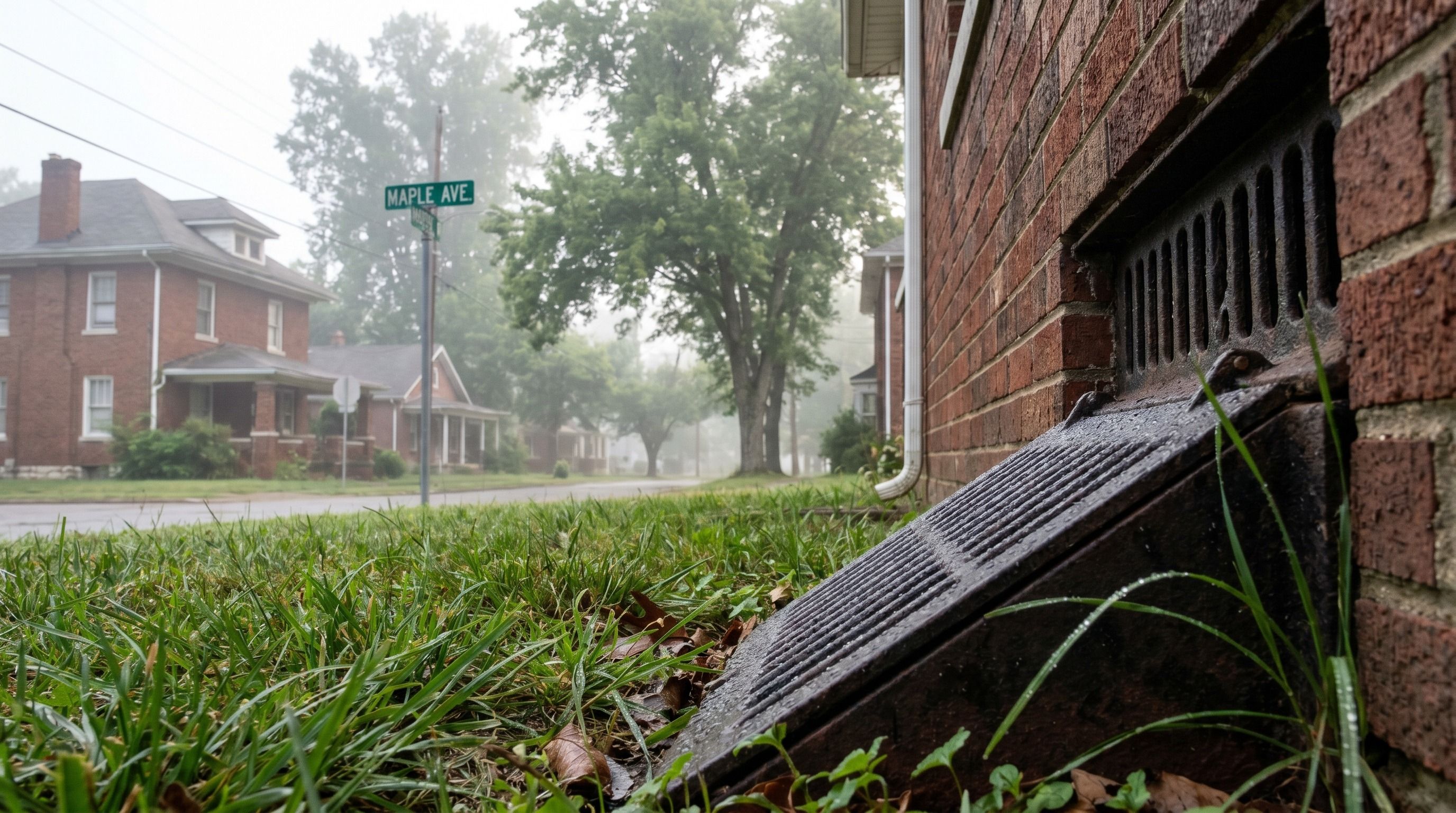
If you have a crawl space mold problem in Tennessee, you are not alone, and it is not your fault. Tennessee’s humid subtropical climate creates conditions where mold growth is nearly inevitable in vented crawl spaces. Here’s the science behind why, what you’re likely dealing with, and how to fix it permanently.
Why Tennessee crawl spaces grow mold
Mold needs three things: organic material to eat (wood, paper, insulation), moisture, and a temperature range it tolerates. Tennessee crawl spaces provide all three in abundance.
Temperature. Tennessee crawl spaces typically run 50 to 80 degrees Fahrenheit year-round. That’s the active growth range for almost every common mold species.
Organic material. Floor joists, subfloor, fiberglass paper backing, dust accumulation, and any cellulose insulation are all food for mold.
Moisture. This is the variable that determines whether mold actually grows or not. The threshold is 16% wood moisture content (which roughly corresponds to 60% air relative humidity for sustained periods).
In a vented Tennessee crawl space, the air sits at 75 to 90% relative humidity from May through September. That’s well above the growth threshold for the entire summer.
The species you’re likely dealing with
The dominant crawl space mold species in Tennessee fall into a few common groups:
Cladosporium
The most common mold in Tennessee crawl spaces. Appears as gray-green or black spots on wood. Generally not toxic but a significant allergen — triggers asthma, hay fever, and skin reactions. Easy to remediate.
Aspergillus
Often appears as yellow or olive-green growth. Some species (Aspergillus niger) are common in damp Tennessee crawl spaces. Most are allergens; a few can cause infections in immunocompromised people.
Penicillium
Blue-green to white growth. Common on damp wood and insulation. Strong musty smell. Some species produce mycotoxins.
Stachybotrys (the so-called “black mold”)
The species that gets the most public attention. Less common than the others but does appear in chronically wet Tennessee crawl spaces. Produces mycotoxins that can cause significant respiratory and neurological symptoms with prolonged exposure.
The honest perspective: most Tennessee crawl space mold is not Stachybotrys. It’s the more mundane Cladosporium and Aspergillus, which are still serious enough to remediate but don’t warrant emergency-grade response.
Where mold typically appears in Tennessee crawl spaces
In order of frequency:
- Floor joists — especially on the underside where condensation lands and on the band joist where the most warm humid air enters
- Subfloor (the underside of your floor decking) — often visible as dark patches between the joists
- Fiberglass insulation paper backing — the paper is essentially mold food once it’s wet
- HVAC ductwork — both inside (if there’s been a leak) and outside (condensation-driven)
- Foundation walls — usually surface efflorescence rather than true mold, but real mold appears in heavily wet spaces
- Support posts and beams — particularly wood posts in contact with damp soil
The health impact you’ll notice in the home above
Mold in the crawl space doesn’t stay in the crawl space. The stack effect pulls crawl space air upward through gaps in the subfloor, around plumbing penetrations, and through any unsealed access door. Mold spores ride that air into the home.
Symptoms Tennessee homeowners describe:
- Persistent allergy symptoms that don’t follow seasonal patterns
- Children developing asthma after moving into older homes
- Sinus infections that recur every 1 to 3 months
- A chronic cough that improves on vacation and returns home
- Skin rashes without obvious cause
- Fatigue and brain fog with no medical explanation
Not every respiratory complaint is mold related. But if symptoms began or worsened after moving into an older Tennessee home with a vented crawl space, the crawl space is worth investigating before pursuing more expensive medical workups.
Why remediation alone doesn’t work
Hire a remediation company to clean the mold off your joists. They do good work. The mold is gone.
Six months later, it’s back. Why?
Because remediation didn’t change the conditions that caused the mold. The crawl space humidity is still 80%. The wood moisture content is still above 16%. The spores in the surrounding environment land on the wood, find the same conditions, and start growing again.
This is the single most expensive mistake Tennessee homeowners make: paying for repeated remediations without changing the underlying environment. Each remediation costs $2,000 to $5,000. Three rounds of remediation costs more than a full encapsulation that prevents the next round entirely.
The right sequence: remediate, then encapsulate
The correct order of operations:
-
Identify the mold extent. Visual inspection by a remediation specialist. Lab testing only if needed for specific situations (real estate disclosure, occupant health concerns).
-
Remediate. Certified team with containment, HEPA filtration, antimicrobial treatment, and physical removal of affected materials.
-
Encapsulate immediately after remediation. While the crawl space is open and clean is the ideal time to install the encapsulation system. The contractor team often handles both phases or coordinates with a remediation partner.
-
Verify post-install. Within 48 to 72 hours after encapsulation, humidity should be below 60% and trending lower. The contractor returns to confirm.
-
Annual visual check for the first 3 years. Confirm no new growth. After 3 successful years, the system is essentially self-sustaining.
The combined remediation + encapsulation cost is typically $9,500 to $14,000. The total cost of the alternative (recurring remediations every few years, plus eventual subfloor replacement when the wood damage becomes structural) easily exceeds $40,000 over 15 years.
When you need lab testing
In most cases, visual inspection is sufficient to drive the remediation decision. Lab testing makes sense when:
- A real estate transaction requires documentation
- Occupants have severe respiratory symptoms and a physician requests environmental testing
- You suspect Stachybotrys and want confirmation before remediation
- Insurance claim requires species identification
Lab testing typically costs $300 to $600 per sample. Don’t pay for it unless one of the above applies.
Tennessee crawl space mold is solvable
The combination of remediation and encapsulation eliminates the mold AND the conditions that caused it. The work is straightforward. The technology is mature. The contractors are trained.
What requires intentionality is committing to the full system rather than the partial fix. Don’t pay for remediation without encapsulation in Tennessee. The mold will be back.
If you suspect crawl space mold in your Tennessee home, request a free inspection through the form on this page. The contractor enters the crawl space, photographs current conditions, identifies extent, and gives you a written assessment with a remediation-plus-encapsulation quote.
Related on this site
Tennessee metros